← Back to Board Games
BOARD GAME 

The Backyard Bug Hunt

A 2-4 player transformative board game based on UD's Entomology Club meant to teach players about bugs they may find in the wild.
Platform:
Board Game
Duration
~4 Weeks
Team:
2 People
My Role:
Writer & Game Design

Project Overview

This was a 4-week project I did with a classmate for my Introduction to Game Design course at the University of Delaware. Each team was assigned a campus club to base their game on—for us, it was the Entomology Club—and tasked with making a transformative game from scratch. After scrapping a rough first version based on the board game Parks, we landed on The Backyard Bug Hunt, a 2–4 player board game where you play as a kid at the end of summer trying to collect more bugs than your friends before the day ends. Our goal was to change how players see bugs by showing them in a fun and peaceful light, while sharing fun facts about the bugs we run into every day.

My Contribution

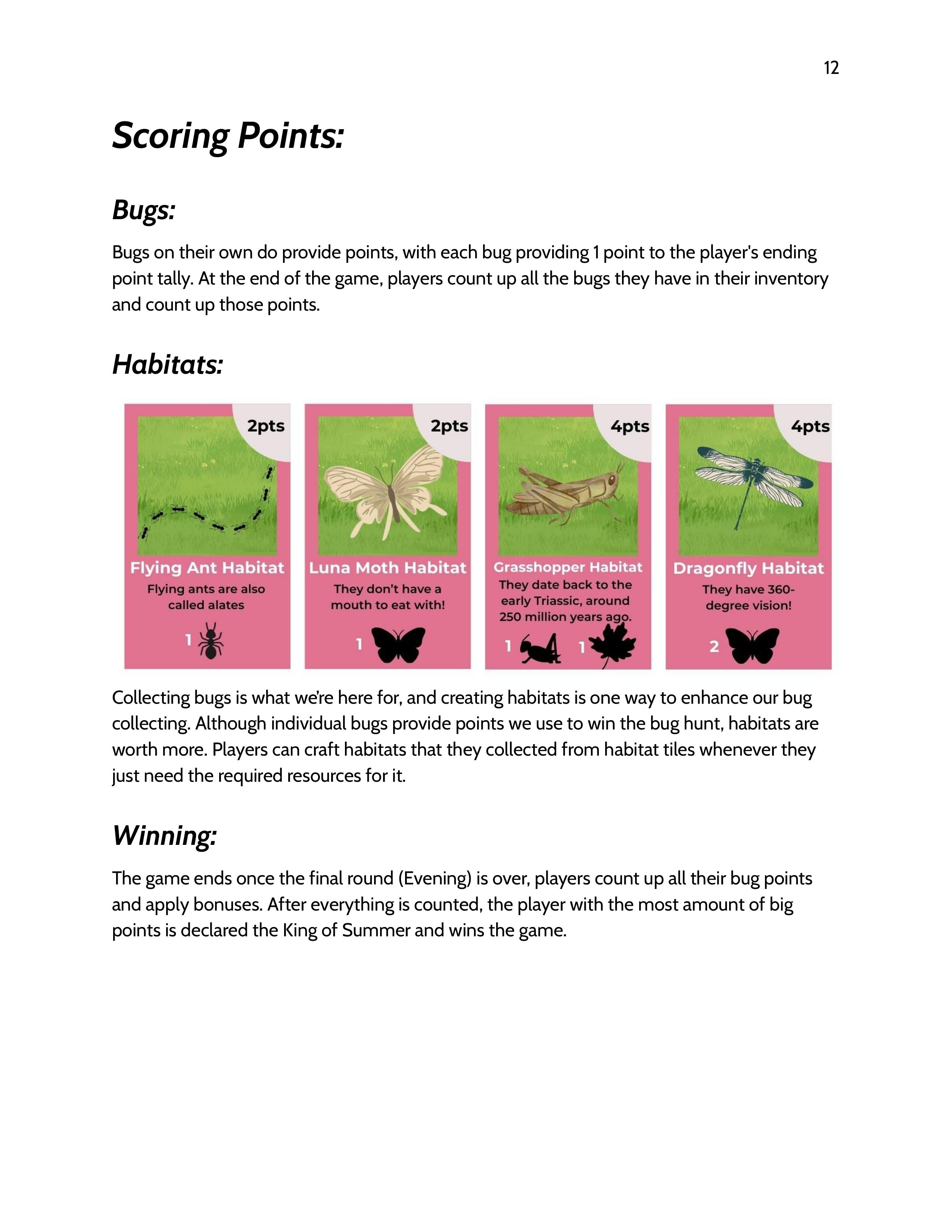
  • Wrote and formatted the rule book, including the story that sets up the end-of-summer bug hunt.
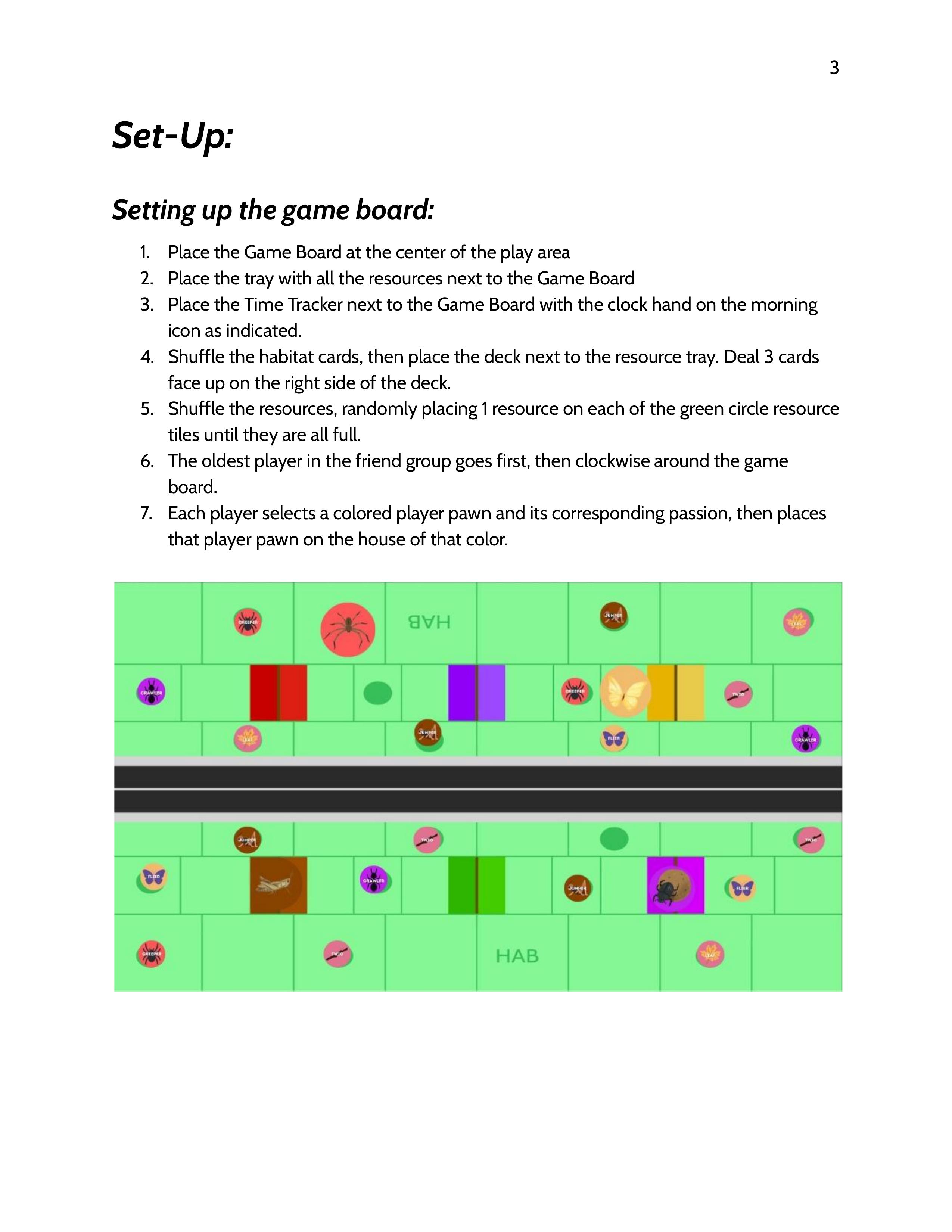
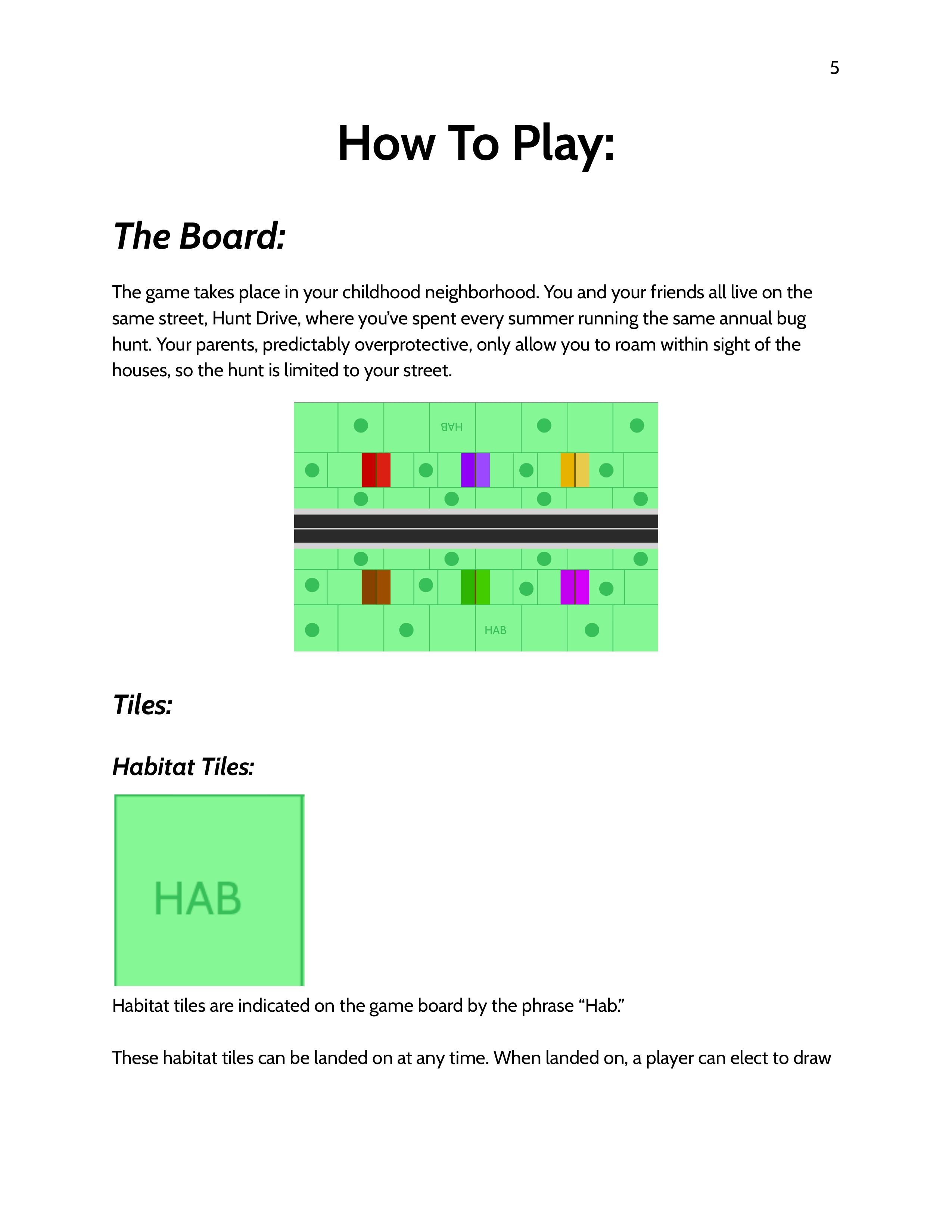
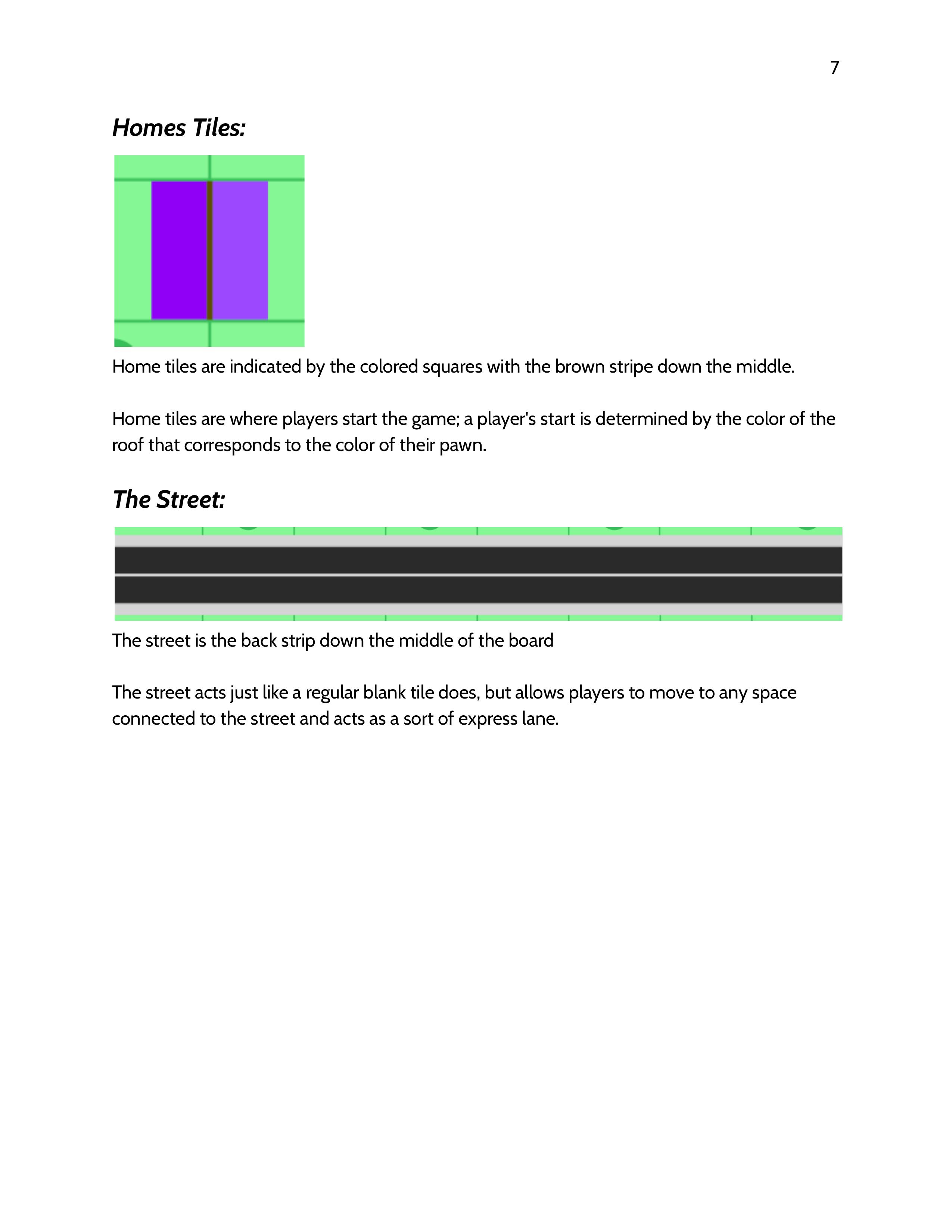
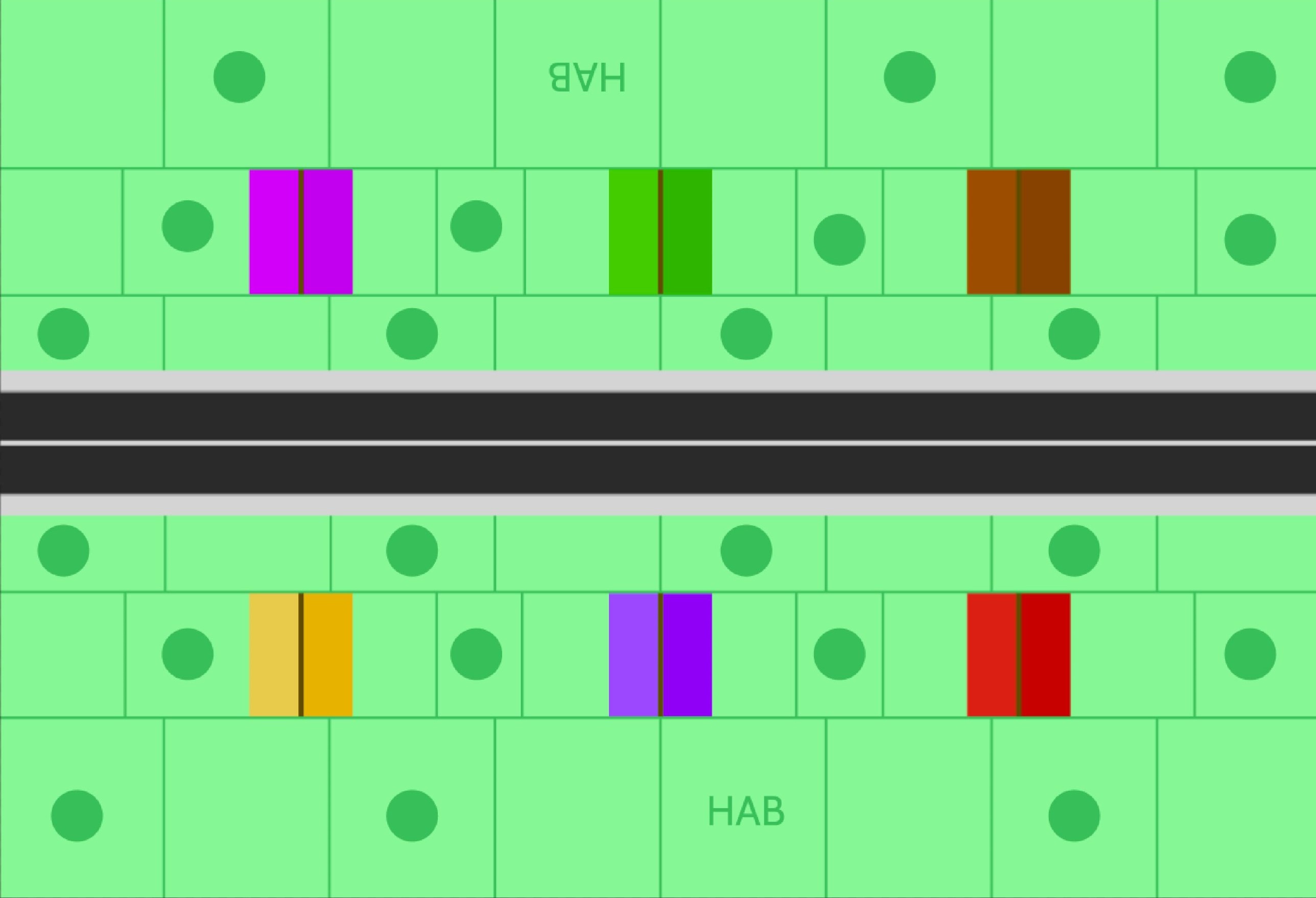
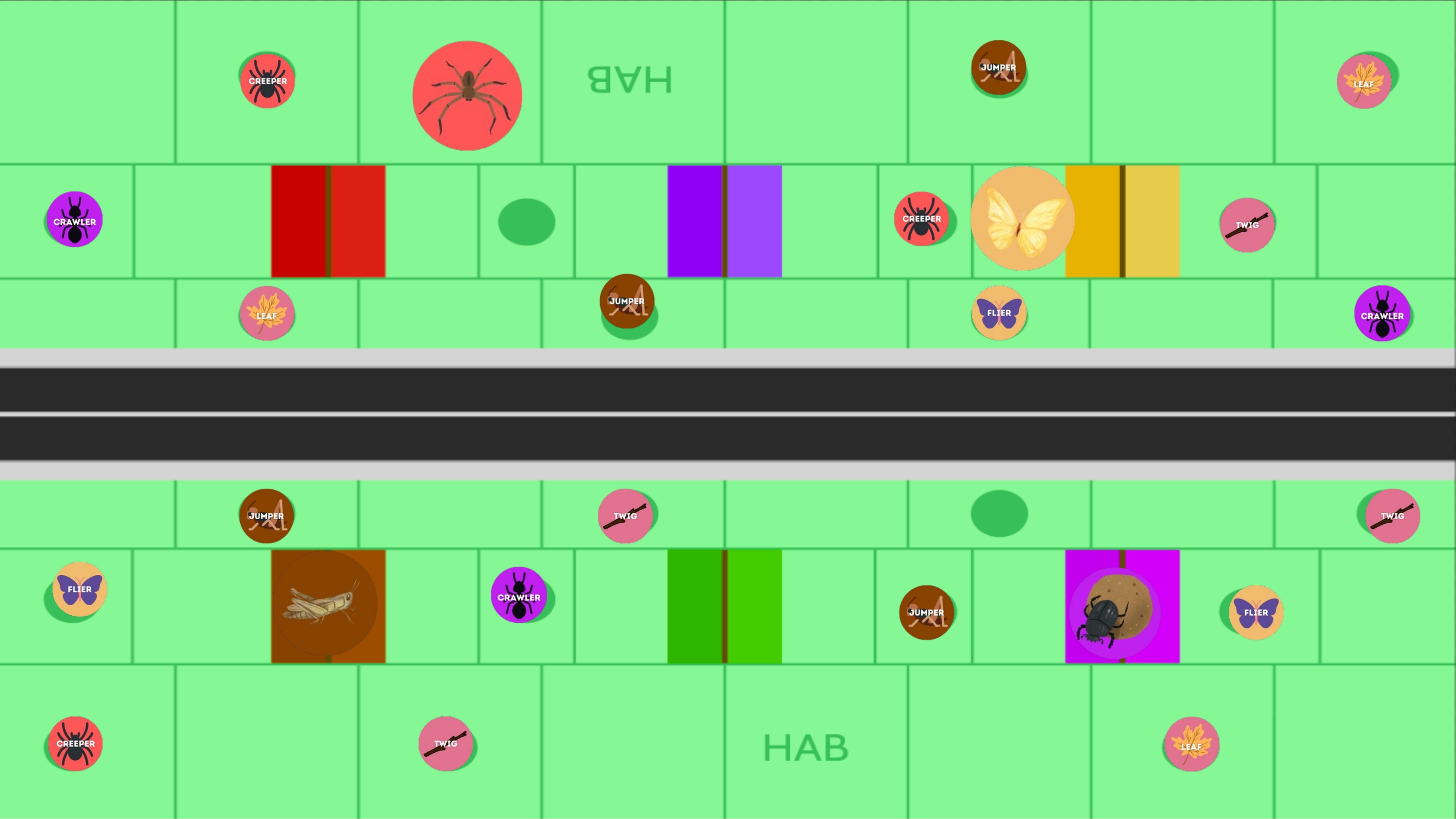
  • Designed the game board, a neighborhood on Hunt Drive where the street acts as an express lane across the board.
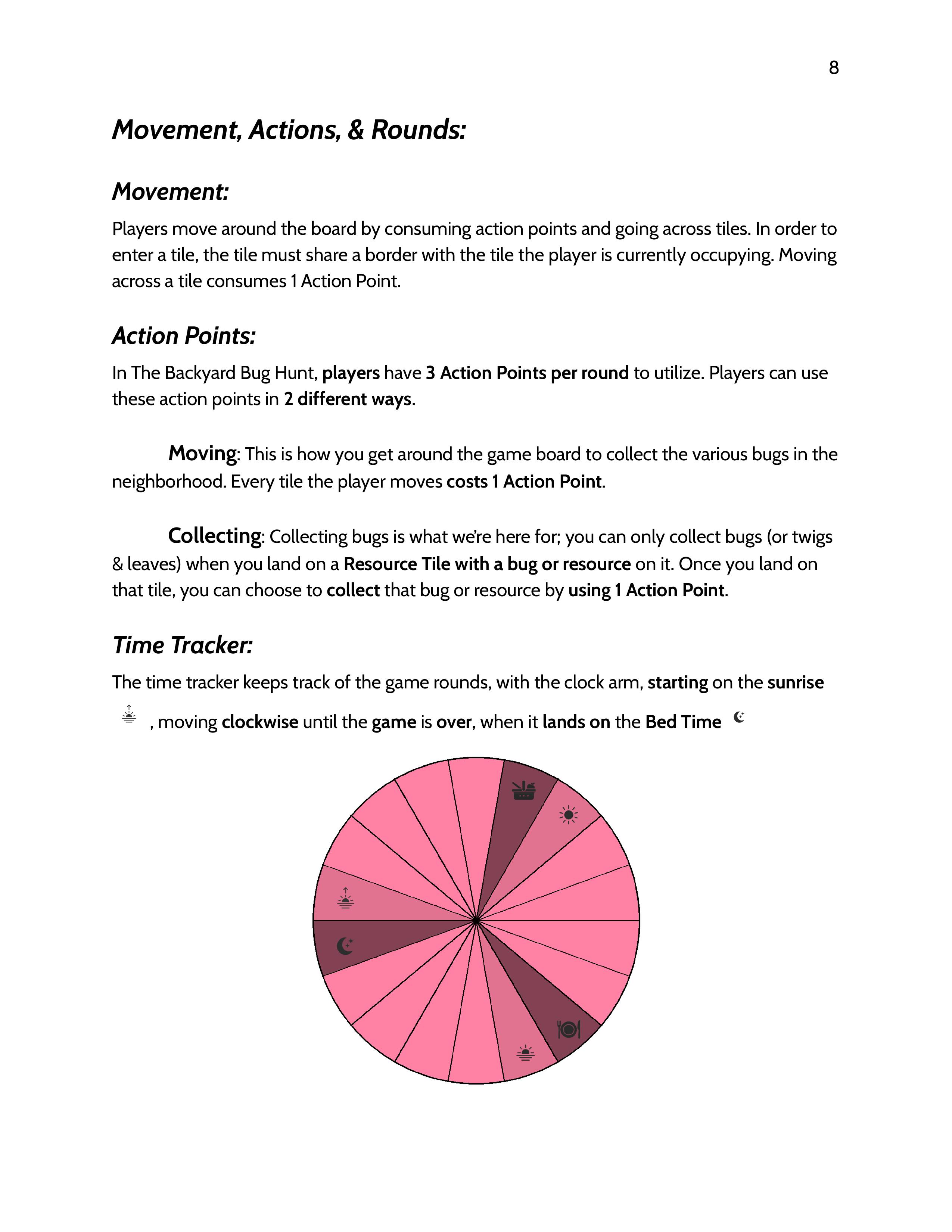
  • Created the time tracker, splitting the day into morning, afternoon, and evening, where players have to head home before each phase ends or lose half their bugs.
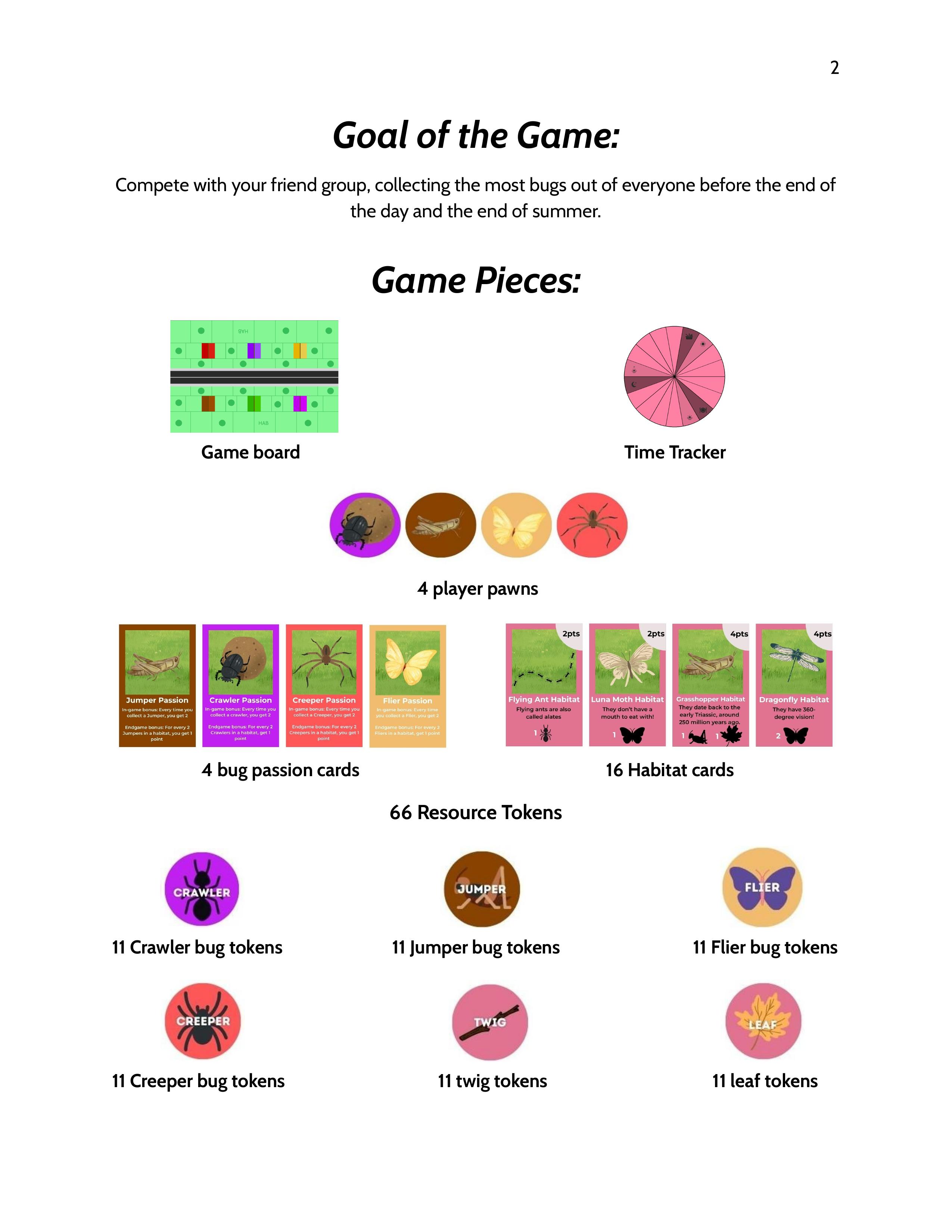
The Backyard Bug Hunt Evolution

Iteration 1

Parks Inspiration

For our first iteration, me and my classmate both took a rough idea of what the board game Parks was and wanted to test a simplistic version of it, to see what the reception was and where we could go from there. Before that, we also had the idea of a game inspired by the 1989 Disney film Honey, I Shrunk the Kids and Obsidian’s Grounded, where a cast of kids shrunk down to bug size were tasked with finding parts to rebuild the shrink machine and get back to normal size. We ran into issues with that idea, and after falling in love with Parks, we decided on a prototype heavily inspired by it.

Going with the Parks-inspired game, we ran into major roadblocks and couldn’t figure out our own spin on how to properly modify the game’s movement. After a few rounds of playtesting and peer feedback, we decided it was time to fully scrap the concept. Although we scrapped a lot of this first iteration, some of it stayed with us until the end, like bug collecting and habitat crafting.

ITERATION 2

Gone With 'Parks'

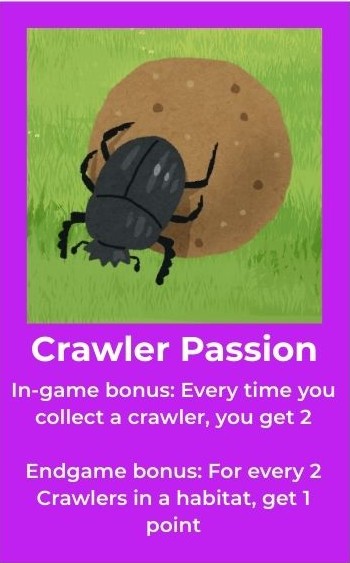
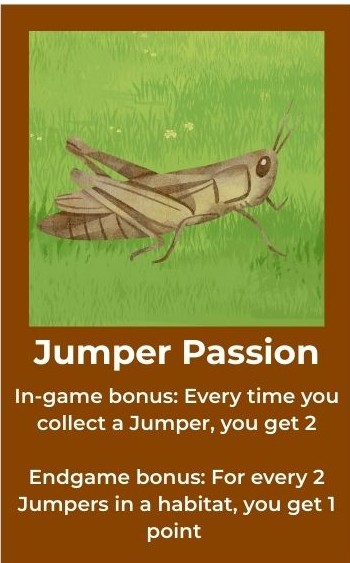
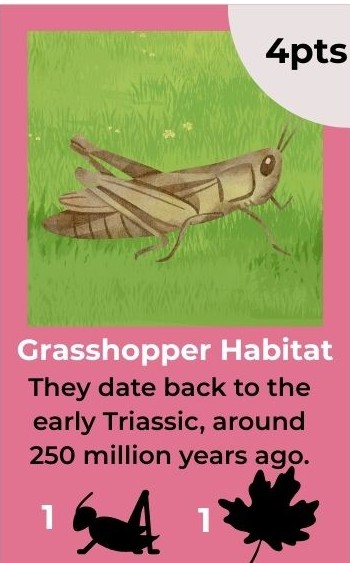
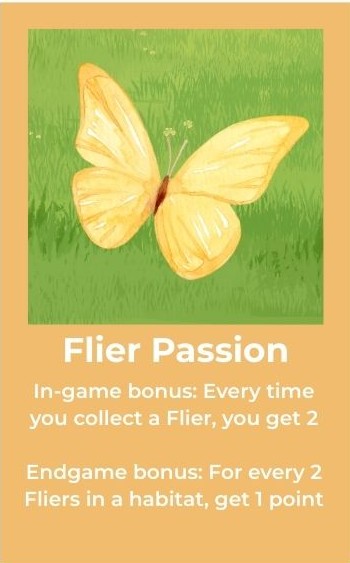
For our second iteration, we kept much of what we had in the first version of the game, like resources, passions, crafting habitats, and trying to get more points than the other players, but redid most of the game board and movement system. One of our initial ideas from before Iteration 1 was a more open-world game board, and this was the version where we ended up fully implementing it.

We also took out the experience point system we had borrowed from video games and RPGs, and instead added a round limit through the Time Tracker and an action point system, where players spend action points to move around the map.

Through our playtesting, players were much more receptive to this version of the game and gave us direction on how to move forward. From this point on, we had the game we wanted to build, and Iteration 3 came down to refining what we had, adding artwork, and balancing.

ITERATION 3

Bringing It All Together

Our third and last iteration saw us finally printing our cards and audience tokens, which track whether Presto is winning or losing the crowd. Since we were focusing on a few things all at once, we had to properly split up the work to hit our deadline, so my partner finished up the card designs while I took control of the rule book, the deception moves, and the win condition.

For me, that meant getting our rule book into a complete first draft and polishing up the moves each player was allowed to use against the other. To fix our games going on forever, we capped the game at 15 rounds split between 3 acts, just like a real magic show, and at the end of each act the audience judges Presto by either applauding or booing him. This gave the game a clear ending and helped build tension as the show went on.

Playtesting, Feedback, & Design Decisions

PLAYTESTING

How Playtesting Evolved the Game

Presto is what it is because of playtesting, and every major aspect of it was altered by playtesting.

KEY DESIGN DECISIONS

Initial Struggles

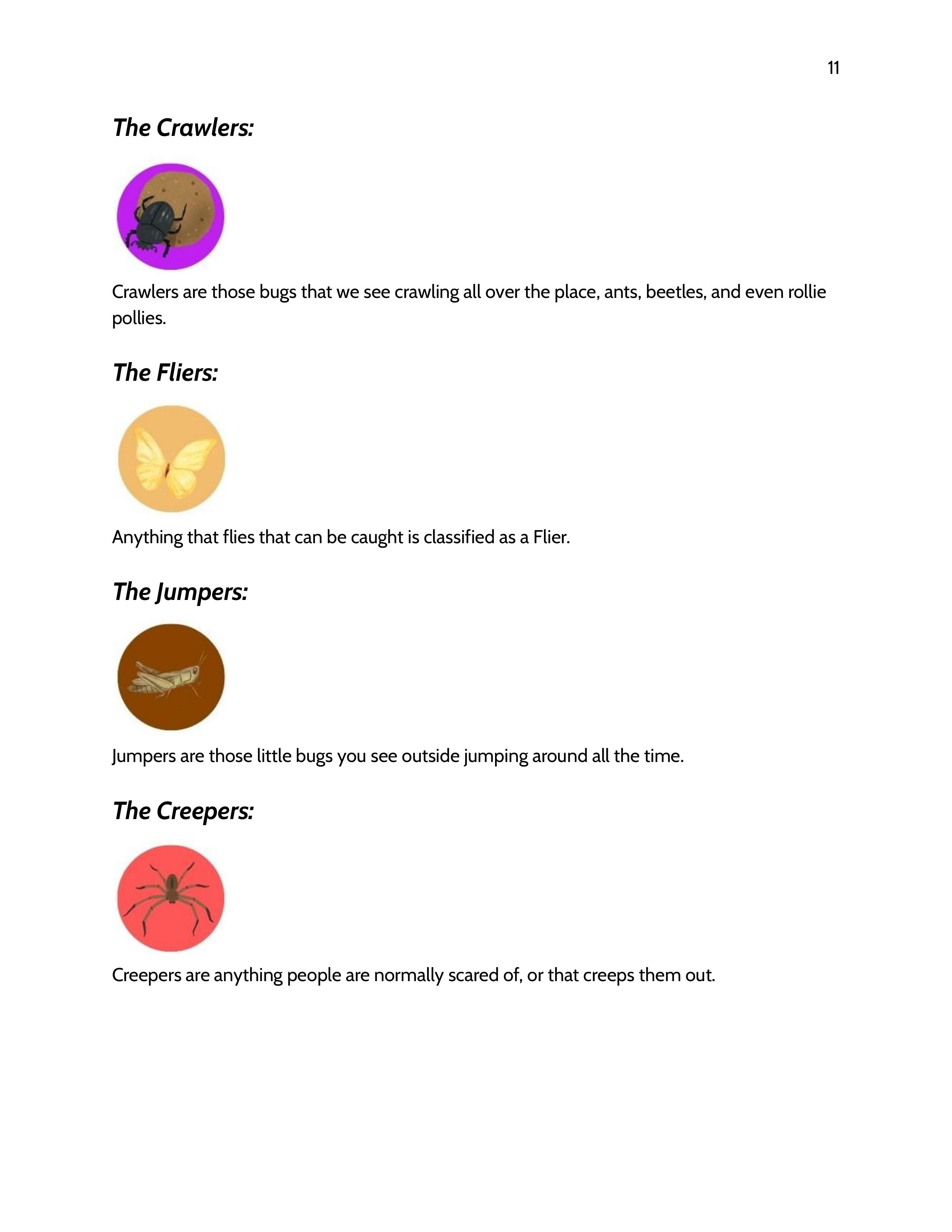
Another issue we had early on was where to go with the game. With such a broad topic as bugs and no sense of direction on what type of board game to make, we ended up with five very different ideas, and we truly didn’t know where to base the board, theme, story, or central mechanics. It would have been nice to try out all five concepts to decide which one was “the best,” but with the time we had, that just wasn’t possible. Instead, we had to pick the strongest concept and figure out what elements of the other four we could bring into it. It was hard to do, but the time constraints forced us to choose something and go with it, and it helped us learn to work under pressure.

REFLECTION

What I learned From The Backyard Bug Hunt

The biggest thing this project taught me is to ditch a concept early on if it’s not working. Our initial foray into something like a Parks clone simply did not work after playtesting, and it was a hard decision to either do major reworks or scrap it and make something more functional, especially on a tight time constraint. But in the end, scrapping the idea worked well, and going forward it’s made me more receptive to player feedback and to making that hard decision, knowing it’s worth it in the end.

If I Touched The Project Again, What I Would Change & Focus On